Staying Healthy at Work Starts with Preventive Care
Cold and flu season has arrived. With schools back in session, cooler weather, and more time spent indoors, trying to...

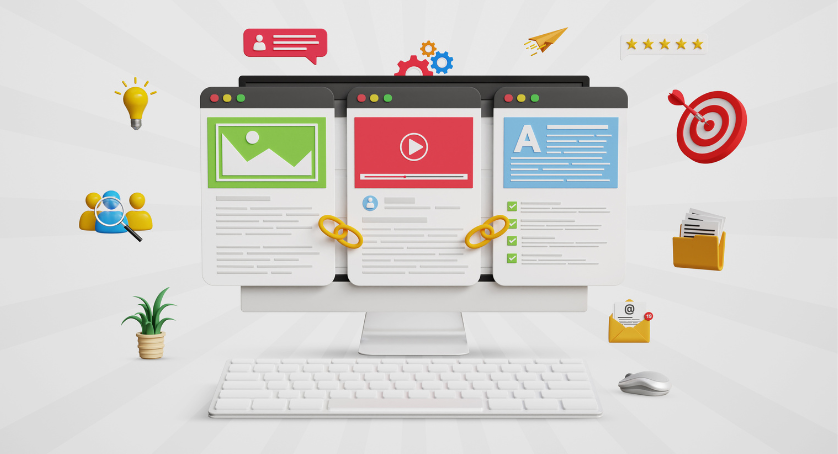
Most discussions around 2026 website trends still focus on faster load times, mobile responsiveness, and visual redesigns. Those updates still matter, but they no longer set leading businesses apart from everyone else.
In 2026, the biggest shift is how websites function within a company’s growth strategy. A modern website is no longer just an online presence. It influences first impressions, supports the sales process, builds trust, improves search visibility, and helps turn interest into action.
The businesses seeing results are steering away from simple redesigns. Instead, they are rethinking how their websites perform.
Buyers are doing more research before they ever speak with a company. According to Gartner, 64% of buyers now prefer a rep-free experience. B2B buyers spend only a limited portion of their buying journey directly with sales representatives, which means self-service research matters more than ever.
Your website is often the first meaningful interaction a prospect has with your brand. Strong websites in 2026 help users make progress before they contact you.
Helpful content often includes:
When this information is missing, users hesitate or leave—not because of a lack of interest, but because they can’t confidently take the next step.
This is where websites are becoming more valuable, not just generating leads, but improving lead quality before a conversation even begins.
Traffic can be bought. Attention can be captured. But trust must be earned, and quickly.
In 2026, users are evaluating credibility almost instantly. Subtle signals carry more weight than ever: how current the content feels, whether the brand voice is specific or generic, whether real people are visible, and whether claims are supported with proof.
A polished design without substance often underperforms compared to a simpler site that feels genuine and transparent. 55% of buyers tend to start their buying journeys independently by comparing three to five vendors.
This is why many businesses are shifting away from vague, polished messaging toward something more grounded. Specificity—with real examples, clear outcomes, and honest expectations—has become one of the most effective ways to build trust.
High-performing websites build trust through:
A website does not need to be overly complex to be effective. It needs to feel credible. Many businesses lose conversions not because of poor design, but because their website feels vague or impersonal.
AI has made content creation faster and more accessible, but it has also made generic content easier to spot, and easier for users to ignore.
Users may not always know for sure whether content was AI-assisted, but they can recognize when something feels repetitive, shallow, or interchangeable with every other website in the market. Search engines are also becoming better at rewarding content that demonstrates expertise, originality, and usefulness over content that simply rephrases existing ideas.
That creates a major opportunity for businesses willing to say something real.
The strongest websites are leaning into depth and perspective. They are publishing content rooted in experience, customer conversations, industry knowledge, and real-world outcomes.
What is working in 2026:
This shift is impacting both user experience and SEO performance. Users spend more time engaging with content that teaches them something valuable, and search engines continue prioritizing content that demonstrates authority and relevance. Businesses that sound like everyone else are easier to overlook. Businesses that offer real insight are easier to remember.
For years, websites tried to say everything at once. Now, the focus is on saying the right things quickly and clearly.
Users are not looking to explore endlessly. They want direction. And you have 50 milliseconds to grab your customers’ attention and make a strong first impression.
Modern websites are simplifying the experience by:
When a visitor lands on your site, they should understand within seconds:
Clarity should be a core part of the user experience. Businesses that communicate clearly often outperform competitors with larger budgets but weaker messaging.
One of the most important 2026 website trends is not visual at all. It is operational.
For years, many companies treated their website like a project: redesign it every few years, launch it, then move on. That model is becoming less effective because customer expectations, search behavior, and business priorities change too quickly.
Leading businesses now treat websites as growth systems that are continuously improved. Instead of waiting years to fix issues, they make regular updates based on data and user behavior.
This often includes:
According to Google, user experience factors such as speed, mobile usability, and helpful content all influence how websites perform in search. That means small, consistent improvements can create meaningful long-term gains.
A website should not be treated as finished. It should evolve alongside your customers and your business. Companies that continuously optimize often see stronger lead quality, better rankings, and higher conversion rates than companies waiting for the next full redesign.
The most important 2026 website trends reflect a larger shift in how people research, evaluate, and choose businesses. Today’s users expect more from a website, and gimmicky features and trendy designs are not enough. Users want answers quickly, trust signals immediately, and a clear path forward without unnecessary friction. If those expectations are not met, they move on.
The businesses seeing the strongest results in 2026 are treating their websites as active growth tools rather than static assets. They are using them to educate prospects, build credibility, improve search visibility, and convert interest into real opportunities. If your website has not evolved alongside customer behavior, now is the time to reassess what it should be doing for your business.
LCS Website Design & Development Services has helped businesses of all sizes build stronger digital foundations through custom website design and development solutions tailored to their goals. From local companies to organizations serving customers around the world, our team creates websites that are modern, strategic, and built to perform. Whether you need a complete redesign or a smarter online presence that drives growth, LCS IT Services and our expert Website Design & Development services can help turn your website into one of your most valuable business assets.