Essential Password Security Tips for 2026
Passwords remain one of the most common entry points for cyberattacks. Password security is one of the easiest and most...

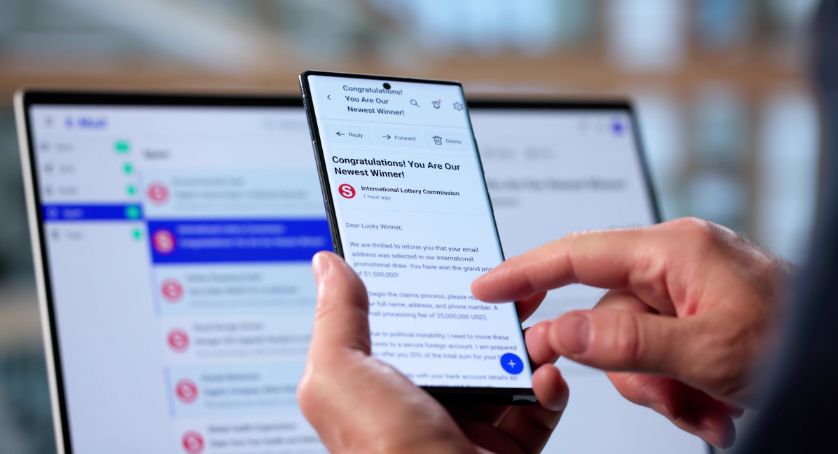
If you’ve spent any time on the internet in the last few decades (which is… just about everyone at this point), you’ve probably come across an example of clickbait. Whether it’s in a social media post, the headline of an article on a less-than-reputable website, or even the subject line of a spam email, clickbait withholds just enough information to pique your curiosity.
“What won’t I guess?” “Who said that?” “Will that one trick really save me money?”
We’ve all given in to temptation and clicked on what seemed like a harmless link at least once. However, when clickbait is used by cybercriminals, letting your curiosity get the better of you can easily land you or your organization in hot water.
In its simplest terms, clickbait is exactly what it sounds like—a piece of content that baits a viewer into clicking a link by evoking an emotional response. Typically, clickbait headlines promise the answer to a question, some kind of personal enlightenment, or use the same tactics as tabloid magazines to entice curious readers about the latest exploits.
Online, clickbait tactics are a common tool of the attention economy. Content creators and advertisers earn more money when more people visit their websites, so they create enticing headlines, ads, and social media posts that encourage readers to click through. In the early years of the internet, the content behind a clickbait headline didn’t even need to be valuable, nor did the viewer need to read it—the click itself was enough to generate revenue. Modern web traffic metrics discourage this kind of low-value content, but some useless yet ultimately harmless clickbait remains to this day.
However, cybercriminals often use clickbait strategies for more nefarious purposes. Through phishing schemes and even AI-driven fake news feeds, hackers use clickbait in hopes that you’ll click before you think—putting your data at risk. To help you stay safe, here’s a rundown on how cybercriminals use clickbait, what information is at stake, and how you can protect yourself and your organization from clickbait scams.
Cyber threats are ever-changing, but the tactics behind clickbait schemes share a common thread—they are designed to elicit an emotional reaction, such as fear or curiosity. They use language that creates urgency and encourages users to click before fully processing what they’re reading. Cybercriminals are skilled at getting their malicious content in front of as many viewers as possible.
Here are a few clickbait tactics to watch out for:
Cybercriminals using clickbait are always adjusting their tactics, and thanks to AI, some malicious links are now virtually indistinguishable from legitimate content. However, with practice and vigilance, there are ways to spot a clickbait scam before you fall victim to it.
Before you click a link, look for these warning signs:
While anyone can fall for a clickbait scam, the cybersecurity cost for organizations can be astronomical if an employee clicks a malicious link on a company device. It only takes one compromised device for an entire network to be at risk. The average cost of a data breach has ballooned to $4.88 million, and many organizations are unprepared to defend against threats such as clickbait and phishing schemes.
According to KnowBe4’s 2025 Phishing by Industry Benchmarking Report, an average of 33.1% of employees will fail a phishing test without cybersecurity training. However, the report also highlights a bright spot—an 86% drop in global phishing click rates after just 12 months of security awareness training. Even as cybercriminals evolve with AI-assisted clickbait schemes, organizations can stay ahead and protect their assets through comprehensive cybersecurity training that covers clickbait, phishing, and other cyber threats.
Concerned about phishing, clickbait scams, and other evolving cyber threats? LCS IT Services can help you strengthen your organization’s security through cybersecurity training, email protection, managed IT services, and more. Contact our team to learn how we can help protect your business.